For high-growth startups, an office fit out isn't cosmetic. It shapes how candidates perceive your company during interviews, how your team collaborates daily, and whether investors see a scrappy operation or a serious business. According to Gensler's 2025 Global Workplace Survey, employees in well-designed workplaces are nearly 3x more likely to stay with their company. Yet only 26% of workers strongly agree their current office helps them do their best work.
The stakes are clear: your first fit out is a culture decision disguised as a real estate project.
Key Takeaways
- Office fit outs transform raw commercial space into fully operational, branded workplaces
- Startups should design for 18-24 month headcount growth, not just today's team — prioritizing flexibility and brand expression above all
- Key design wins: modular layouts, acoustic zoning, natural light, and focus pods that reflect your brand
- NYC fit out costs range $190–$425+ per square foot depending on specification
- The right NYC fit out partner — like Nomad Group, with 300+ buildouts completed — keeps projects on time and on budget
What Is an Office Fit Out?
An office fit out is the process of transforming an empty or unfinished commercial interior into a fully functional workspace. It covers everything: layout planning, partition walls, ceilings, flooring, lighting, mechanical systems, furniture, technology infrastructure, and branding elements.
In the US market (especially NYC), you'll encounter different starting conditions that affect scope and budget:
Vanilla box (white box): The most common starting point for NYC startups — a landlord-delivered space that already includes:
- Fire-taped walls ready for paint
- Electrical panel and outlets
- Sealed concrete or finished floors
- Finished ceilings with lighting
- HVAC with ductwork and controls
- Code-required sprinkler systems
Grey shell (cold shell): A raw, unfinished state requiring far more investment. Expect bare studs, unfinished floors, and no internal plumbing or electrical distribution. Build-out costs run considerably higher than vanilla box work.
Most startups lease vanilla box spaces and execute what's called a tenant improvement (TI) buildout—the customization phase where you turn that blank canvas into your branded, operational office. Knowing your starting condition upfront prevents budget surprises — especially in NYC, where TI allowances and landlord concessions vary widely by neighborhood and lease term.
Top Office Fit Out Design Ideas for Startups
The best startup office fit outs balance open collaboration with focused work, reflect company brand, and flex as the team scales. The ideas below deliver the highest impact for early- and growth-stage companies.
Flexible, Modular Layouts
Modular furniture systems and movable partitions let your office adapt to new hires, restructured teams, and hybrid schedules without structural renovation. According to Carta's 2024 startup data, startup headcounts fluctuate as companies prioritize efficiency and extend runway—making flexibility essential.
Key modular elements to consider:
- Reconfigurable workstation clusters that expand or contract
- Rolling whiteboards and mobile storage pedestals
- Lightweight partition walls that segment space or open it up as needed
- Height-adjustable desks that support hot-desking and hybrid models
When your team doubles in 18 months — or restructures after a pivot — modular design means you're rearranging furniture, not breaking leases.
Dedicated Collaboration Zones and Quiet Focus Areas
Purely open-plan offices harm productivity. Harvard research by Bernstein and Turban found that transitioning to open layouts reduced face-to-face interaction by 70% while increasing email volume by 56%. Employees retreated behind screens instead of collaborating.
The solution? A zoned approach:
- Team tables, writable walls, and lounge clusters for brainstorming and standups
- Acoustic corners, privacy pods, and focus rooms for deep work and video calls
- Enclosed phone booths for 1:1s and calls — without dedicating full private offices
For startups, focus pods deliver especially strong ROI—they enable heads-down work and confidential conversations without the cost of permanent offices.
Natural Light and Biophilic Elements
Research by Boubekri et al. showed that optimized daylight produced 42% higher cognitive performance scores and 37 minutes more sleep per night. In NYC, where floor plates can be deep and windows limited, this becomes a critical planning constraint.
To maximize daylight, position workstations near windows, use glass partitions instead of drywall, and avoid blocking sightlines with tall storage or solid walls. Once you've optimized the light, layer in biophilic elements to complete the effect:
- Living plant walls as room dividers
- Potted plants on desks and communal areas
- Natural wood finishes and organic textures
- Views of greenery where possible
These additions reduce the sterile feel of raw loft spaces common in Flatiron and SoHo buildings while producing the cognitive and sleep gains the research documents.
Acoustic Management
Acoustic control is one of the most overlooked fit out decisions—and one of the most damaging when ignored. Oxford Economics research found that only 1% of employees can block distractions without extra steps, and workers in the noisiest environments are more likely to leave within six months.
NYC startup offices often feature exposed ceilings and hard concrete floors—both amplify noise. Poor acoustics kill productivity and make video calls unbearable.
Practical acoustic solutions by budget level:
| Treatment | Application | Budget Level |
|---|---|---|
| Fabric acoustic panels | Mounted on walls in open areas | Low-Mid |
| Ceiling baffles | Suspended from exposed ceilings | Mid |
| Carpet tiles | High-traffic and collaboration zones | Low-Mid |
| Sound masking systems | Background noise to cover conversations | Mid-High |
| Upholstered furniture | Sofas, task chairs, banquettes | Low-Mid |
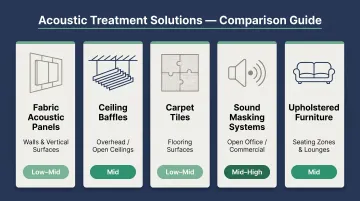
Address acoustics during layout design — retrofitting after buildout costs two to three times more and rarely solves the problem completely.
Brand-Aligned Aesthetics
Your office is often the first physical expression of your brand that employees, candidates, clients, and investors experience. Strategic use of brand colors, signage, and custom elements reinforces identity without expensive bespoke joinery.
Layer brand personality cost-effectively:
- Open with a branded wall, logo installation, or statement art piece at the reception entrance
- Carry brand colors through accent walls, soft furnishings, and wayfinding signage
- Select art that reflects where the company is and where it's headed
- Display milestones, product mockups, or a "wall of wins" to tell the company story
Visitors — whether a Series B investor or a senior engineering candidate — read these cues immediately.
Ergonomic Furniture and Wellness Amenities
Ergonomic investment pays off in reduced sick days, sustained focus, and better retention—critical when competing with large tech employers on workplace experience.
Baseline ergonomic standards:
- Height-adjustable desks
- Ergonomic task chairs with lumbar support
- Monitor arms for proper eye level
- Adequate workstation depth (minimum 30 inches)
Wellness additions that elevate experience:
- Well-designed kitchen and social area
- Quiet relaxation nook or lounge
- Standing meeting tables
- Access to outdoor space (roof deck, terrace)
When a candidate is weighing your Series A offer against a Big Tech package, the quality of the physical environment often tips the decision.
Designing for Growth: How to Plan a Startup Office That Scales
Most startups sign 3–5 year leases but can't accurately predict headcount 18 months out. Build flexibility into your fit out from day one — your design needs to serve the company you're becoming, not just the one you are today.
Right-Size with Room to Grow
Design for anticipated headcount at 18–24 months, not current team size. Use space planning benchmarks to calculate whether your space supports your growth trajectory.
Manhattan space benchmarks (per employee):
| Layout Type | Square Footage (RSF) |
|---|---|
| Traditional (pre-pandemic) | 175-225 RSF |
| Hybrid (2025) | 125-175 RSF |
| Efficient Class A | 120 RSF |
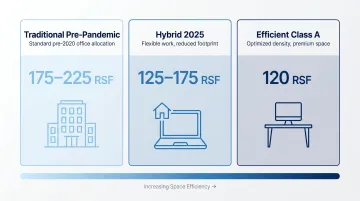
Note: Manhattan benchmarks use rentable square feet (RSF), which includes a typical 28% load factor above usable space. A 5,000 USF space leases as approximately 6,400 RSF: you're paying for more than you physically occupy, so factor that gap into your budget from the start.
Design with Phasing in Mind
Fit out a core zone at full quality on day one. Leave secondary zones (additional workstation banks, a second conference room, expanded break area) as planned future phases that activate as headcount grows.
Benefits of phased buildout:
- Controls upfront capital outlay
- Maintains high-quality experience in occupied areas
- Avoids over-building space you don't yet need
- Allows budget flexibility for early-stage hiring and product development
Plan Infrastructure for Full Buildout
Infrastructure decisions made during the original fit out are expensive to undo. Plan these elements for the full anticipated buildout, even if some aren't constructed immediately:
- Electrical capacity and panel load
- Data cabling routes and pathways
- HVAC zoning and ductwork placement
- Structural considerations (where partitions can be added later)
Getting this right upfront can save $50,000–$150,000 in retrofit costs when you're ready to expand — a material number at the Series A or B stage.
Building Culture Through Your Office Design
For startups, the office is a culture tool. It signals values to candidates, gives remote employees a reason to come in, and creates shared rituals that bind early teams. A generic office undermines recruitment and retention when you can't yet compete on compensation alone.
Translate Values into Spatial Decisions
Your physical space should reflect what your company actually stands for — not just what looks good on a mood board:
- Transparency-first culture: Glass-walled offices, open sightlines, visible leadership
- Highly collaborative team: Informal lounge seating, writable surfaces, team zones
- Wellness-focused company: Abundant plants, natural materials, well-equipped kitchen
- Creative agency: Bold colors, flexible layouts, inspiring art installations
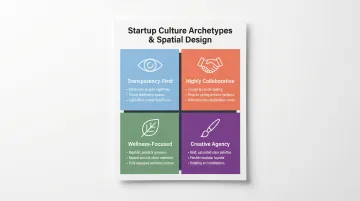
Every spatial choice communicates something. Make sure it says what you intend.
Design a Strong Arrival Experience
The reception and entrance disproportionately shape how visitors perceive your company. Even on a startup budget, a thoughtful entrance creates impact:
- Clear brand presence (logo, signage, branded wall)
- Comfortable waiting seating
- Good lighting (natural or well-designed artificial)
- Clean, uncluttered sightlines
In a city like New York, where candidates are weighing multiple offers, first impressions in the lobby often set the tone before a single interview question is asked.
Use Storytelling Elements
Art, artifacts, and displayed milestones create belonging and pride among early employees:
- Company timeline on the wall
- Product prototypes or mockups on display
- Customer testimonials or case studies
- Team photos from company events
Done well, these touches make new hires feel they've joined a story already in progress — and give them a reason to stay long enough to write the next chapter.
Budgeting a Startup Office Fit Out: What to Expect
Office fit out costs vary significantly based on specification level, existing building condition, and NYC labor rates.
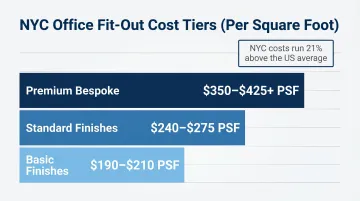
NYC Fit Out Cost Benchmarks (Per Square Foot)
| Specification Level | Cost Range (PSF) |
|---|---|
| Low (basic/functional) | $190–$210 |
| Mid (standard finishes) | $240–$275 |
| High (premium/bespoke) | $350–$425+ |
Turner & Townsend's 2025 data shows NYC costs are approximately 21% above the US average. Professional fees add 12–18% of construction costs, and a 10–15% contingency is recommended.
Tenant Improvement (TI) Allowances
Colliers data shows Manhattan TI allowances average $137.65 per square foot for new deals in 2025. That figure reflects larger, longer-term leases. Startups leasing under 10,000 sq ft with 3–5 year terms should expect materially lower TI allowances.
Critical planning factor: Negotiate TI before signing and build the gap between your allowance and actual fit out cost into your capital plan.
Control Costs Without Compromising Impact
That gap is manageable with the right approach. These four levers help startups stretch their budget without cutting what clients and employees actually see:
- Build out core areas first; activate secondary zones as headcount grows
- Lease or buy refurbished furniture to avoid large upfront purchases
- Choose durable mid-range finishes over premium options — longevity matters more than brand
- Spend on reception, the main work floor, and your primary conference room; save on back-of-house areas
For startups still figuring out headcount or growth trajectory, Flex by Nomad offers a different path entirely — fully built-out spaces with flexible terms, so you're not committing capital to a fit out before you know exactly what you need.
Working with an Office Fit Out Partner in NYC
The difference between a smooth, on-time, on-budget fit out and a stressful, over-run project often comes down to the partner you choose.
Key Qualities to Look For
- Demonstrated experience with commercial tenant buildouts (not just residential or retail)
- Knowledge of NYC Department of Buildings (DOB) permitting and landlord approval processes
- Transparent pricing and realistic timelines
- A partner who can deliver within a 90-day window is far more valuable than one who promises perfection six months out
Typical Fit Out Timelines
Standard renovation for spaces up to 10,000 sq ft typically requires an 8–14 week construction window. The total project lifecycle—from initial planning to move-in—spans 3–6 months, encompassing design, permitting, procurement, construction, and handover.
NYC-specific factors that affect timelines:
- DOB permit review and approval
- Landlord approval of construction documents
- Union labor scheduling in Class A buildings
- Long lead times for MEP (mechanical, electrical, plumbing) equipment
- Building management coordination for freight elevator access and after-hours work
Nomad Group's Fit Out Capabilities
Nomad Group delivers end-to-end construction management for NYC startups, covering space selection, lease negotiation, design, permitting, buildout, and facilities management. With over 300 completed tenant buildouts across Flatiron, NoMad, and SoHo, the team knows how to navigate NYC's approval processes and keep projects on time and on budget.
Nomad's in-house design and construction teams work directly with clients to design spaces that match their brand and scale with their team.
That hands-on model produces real results: one recent buildout took a white-box space to a fully operational office with HVAC in just five weeks, giving the startup's team a functional home with minimal downtime.
Frequently Asked Questions
What does office fitout mean?
An office fit out is the process of transforming a raw or unfinished commercial space into a fully functional, furnished, and branded workplace. It covers partitions, flooring, lighting, furniture, technology infrastructure, and interior finishes.
Is 10x10 too small for an office?
A 10x10 space (100 sq ft) can accommodate one focused workstation but is too small for a team-facing startup office. Manhattan hybrid benchmarks recommend 125-175 RSF per employee, so even a 5-person team needs at least 625–875 sq ft to function comfortably.
How much does a startup office fit out typically cost in NYC?
NYC fit out costs range from $190-$210 per square foot for basic spec to $350-$425+ PSF for premium buildouts. Landlord TI allowances can offset a significant portion of costs, and phased buildouts help manage upfront outlay.
How long does an office fit out take for a startup?
A typical startup office fit out in NYC takes 8–16 weeks from design approval to move-in, depending on complexity, permitting timelines, and building condition.
What's the difference between a Category A and Category B office fit out?
Category A (a UK/international term) is a landlord-finished blank canvas with standard ceilings, lighting, and flooring. Category B is a fully customized buildout to the tenant's specs. In the US, these map to "vanilla box" and "tenant improvement buildout," respectively.