Introduction
Every VC-backed founder knows the tension: your investors want fiscal discipline, but a premium Manhattan address may be the single biggest factor in convincing a senior engineer to choose you over a competitor, or in closing that enterprise deal. Dismiss the office question as vanity spending and you risk cultural stagnation and recruiting losses. Sign a 10-year Midtown trophy lease to compensate, and you've locked up capital that should be funding your next hiring cycle.
The good news is this tradeoff has become less binary. Manhattan's luxury office market has expanded well beyond traditional Midtown towers. Neighborhoods like NoMad, Flatiron, SoHo, and Union Square now offer Class A environments designed for high-growth startup culture, with flexible terms that match how venture-backed companies actually operate.
This guide covers the four buildings best suited to VC-backed companies across Manhattan's most active corridors, what to prioritize when evaluating them, and how to avoid the lease commitments that drain capital and stall team growth.
Key Takeaways
- Luxury office space is a strategic tool — it signals credibility to investors, attracts talent, and supports culture at scale
- The best buildings combine premium finishes with flexible leases, scalable floor plates, and startup ecosystem proximity
- Top neighborhoods: NoMad, Flatiron, SoHo, Union Square, and Grand Central
- Prioritize buildout speed, lease flexibility, tech infrastructure, and neighborhood fit over aesthetics alone
- A real estate partner who knows high-growth companies helps you avoid lease commitments that outlast your headcount projections
Why Your Office Address Is a Strategic Asset
For a VC-backed company, your office address isn't a line item — it's doing active work.
It shapes how investors read your operation during LP tours and board meetings. It influences whether top engineers take your offer or a competitor's. It signals to enterprise clients whether you're a company worth trusting with their business. Each of those impressions compounds over time.
The Midtown South Advantage
Manhattan's startup ecosystem has concentrated itself in a specific geography. Nomad Group calls it "Unicorn Lane" — the corridor running through NoMad, Flatiron, and Union Square where a disproportionate share of NYC's fastest-growing venture-backed companies operate. The numbers support this clustering effect: Midtown South captured two-thirds of all Manhattan tech leasing demand in 2025, and 69% of all AI leasing citywide landed in that same corridor.
That density matters for reasons beyond prestige. When your office sits in a neighborhood full of peer companies, your recruiting pipeline benefits from the foot traffic. Informal investor meetings happen because your building is already on their route. The ecosystem does work that no amenity package can replicate.
The Burn Rate Reality
The concern most founders raise is valid: luxury office commitments can destroy financial flexibility. But that concern applies to traditional 10-year direct leases, not to what today's Class A market in Midtown South actually offers.
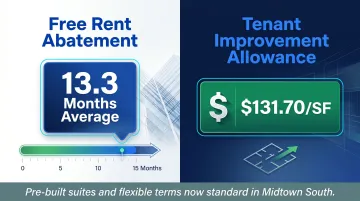
Tech tenants in Manhattan received weighted average rental abatements of 13.3 months and tenant improvement allowances averaging $131.70/SF in 2025. Pre-built suites have multiplied. Landlords competing for high-growth tenants are offering expansion options, shorter initial terms, and sublease rights that didn't exist five years ago. A Series A company can access a premium environment without the capital exposure that "luxury" used to imply.
Top Luxury Office Buildings for Venture-Backed Companies
Each of these four buildings earns its place for a different reason — but all sit squarely in Manhattan's most active VC corridors and deliver the infrastructure, address, and peer environment that high-growth companies actually need.
1250 Broadway (Nomad Tower) — NoMad
Nomad Tower sits at the geographic center of the NoMad neighborhood and underwent a full renovation that transformed it into one of Midtown South's most amenity-rich addresses. Owned by Global Holdings Management Group and leased through JLL, the 39-story, 713,000 SF building holds LEED Platinum, Energy Star, and Wired Gold certifications. Notable tenants include TransPerfect and Thoughtworks.
The tenant base skews toward growth-stage technology companies, which creates an informal community effect — the kind of networking that happens in a shared lobby, not a scheduled event. That peer proximity, paired with serious infrastructure depth, is what makes this building worth the look for Series A–C companies.
Key amenities:
- Full fitness center
- Private lounge with ping-pong, pool table, and arcade games
- 90-person amphitheater
- Conference room with presentation capabilities
- 12th-floor terrace and private coffee bar
- 150-car indoor parking garage
- NYC's largest bicycle storage for an office building
- Access to 12 subway lines, PATH, and Penn Station
| Detail | Info |
|---|---|
| Neighborhood | NoMad (Midtown South) |
| Certifications | LEED Platinum, Wired Gold |
| Best Fit For | Series A–C companies seeking high-energy environment with peer startup proximity |
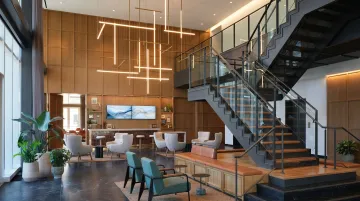
200 Fifth Avenue — Flatiron District
Managed by L&L Holding Company, 200 Fifth Avenue sits at the corner of Fifth Avenue and 23rd Street, directly across from Madison Square Park. Originally constructed in 1908 and substantially modernized through 2007–2008, the 14-story building offers typical floor plates of 56,000–63,000 SF.
Ceiling heights run around 10'3" on upper floors — enough to support the open, high-ceilinged layouts that recruiting-conscious companies favor.
DoorDash signed here in January 2024, a signal that the building's tenant mix has shifted toward high-growth technology companies alongside established names like Tiffany & Co. and Endeavor. For investor-facing companies, the Flatiron address carries a combination of credibility and accessibility that pure Midtown towers struggle to match — particularly given the neighborhood's walkability to NYU, New School, and multiple VC firm offices.
Key infrastructure:
- 1,000 KW emergency generator
- 25,000-amp electrical service
- New telecom point of entry and fiber risers
- Direct expansion A/C on every floor
- LEED Certified
| Detail | Info |
|---|---|
| Neighborhood | Flatiron District |
| Building Size | 14 floors, 56,000–63,000 SF typical floor plates |
| Best Fit For | Seed to Series B companies prioritizing an investor-facing address at the core of NYC's startup ecosystem |
One SoHo Square (161 Avenue of the Americas) — SoHo
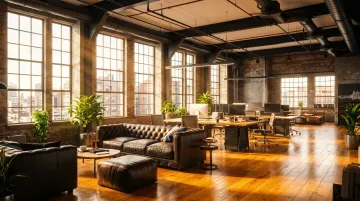
Owned by Stellar Management, One SoHo Square is a 768,000 SF complex anchored by the 15-story Butterick Building at 161 Avenue of the Americas, with a sister building at 233 Spring Street. The two-story lobby was redesigned by Gensler in 2017 into a signature creative arrival. Tenants include Flatiron Health, Glossier, and MAC Cosmetics — a mix that reflects the building's appeal to consumer tech, media, and creative companies.
For consumer tech and AI companies where culture and brand are recruiting tools, the physical environment sends a message before a candidate even opens their laptop. Loft layouts with soaring ceilings and original architectural details do that work. The rooftop deck reinforces it — and the neighborhood's market momentum backs the decision up.
Midtown South — which includes SoHo — captured 69% of all AI leasing citywide in 2025, with AI firm demand reaching 0.67 million SF in Q1 2026 alone.
Key amenities:
- Rooftop deck with skyline views
- Light-filled loft layouts with high ceilings and original architectural details
- Smart building systems and energy-efficient features
- Move-in ready suites and customizable layouts
- 24/7 secure access and on-site fitness facilities
- C and E trains directly outside; approximately 10 minutes to Penn Station
| Detail | Info |
|---|---|
| Neighborhood | SoHo |
| Complex Size | 768,000 SF (two-building complex) |
| Best Fit For | Consumer tech, AI, and creative startups at Series A–C prioritizing design culture and downtown energy |
One Vanderbilt — Grand Central
One Vanderbilt is Manhattan's defining trophy office tower — 1,401 feet, 55 office floors, developed by SL Green and valued at $4.7 billion. It reached 100% occupancy in September 2024, with reported lease rates around $265/SF. Tenants include The Carlyle Group, KPS Capital Partners, and Oak Hill Advisors — firms that treat their address as an institutional signal.
For most Series A and B companies, One Vanderbilt isn't the right fit. But for a Series C+ company approaching a large round, managing significant enterprise client relationships, or preparing for public markets, the building's signaling power is unmatched in the city.
The practical case reinforces the prestige case. Direct Grand Central and LIRR access expands recruiting geography across the entire tri-state area. Column-free floor plates support buildout customization at scale, and LEED Platinum plus WELL Health-Safety certifications meet the infrastructure bar institutional tenants require.
Key amenities:
- Direct Grand Central Terminal and LIRR connection
- 30,000 SF amenity floor with auditorium, 30-seat boardroom, and outdoor terrace
- Column-free floor plates with floor-to-ceiling windows
- WiredScore Platinum connectivity
- LEED Platinum and WELL Health-Safety certified
| Detail | Info |
|---|---|
| Neighborhood | Grand Central / Midtown East |
| Reported Asking Rent | ~$265/SF (trophy premium) |
| Best Fit For | Late-stage Series C+ companies, investor-relations-heavy organizations, or enterprise SaaS firms requiring maximum address prestige |
What to Prioritize When Evaluating Luxury Office Space
The building tour will focus on aesthetics. These four factors matter more.
Lease Flexibility and Scalability
A 20-person Series A company can become a 60-person Series B team within 18 months. Standard 7–10 year direct leases don't accommodate that trajectory. Before you sign, negotiate for:
- Expansion options with defined terms for adjacent or additional space
- Shorter initial terms (3–5 years with renewal options) that align with funding cycles
- Sublease rights that give you an exit if headcount contracts after a restructuring
- Free rent concessions, currently realistic in Manhattan — tech tenants averaged 13.3 months of abatement in 2025
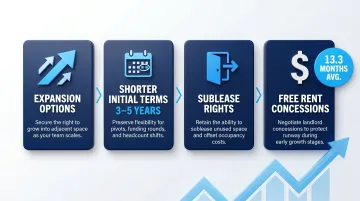
The per-square-foot rate matters, but these structural terms determine whether the lease becomes a liability when your business changes.
Buildout Speed and Move-In Readiness
Funded startups operate on investor timelines. A 6-month gap between lease signing and occupancy costs recruiting momentum, culture continuity, and real cash in temporary space — time your competitors are using to hire.
Pre-built suites cut that gap to weeks. For raw spaces, the quality of your buildout partner determines everything. Nomad Group's construction team has delivered full buildouts in as little as 5 weeks (including HVAC), and their standard turnaround is 90 days — roughly half the typical Manhattan fit-out timeline.
Tech Infrastructure
Tech infrastructure is where luxury buildings either earn their premium or don't. Before signing, ask:
- What is the building's fiber connectivity and does it have redundant providers?
- What is the backup generator capacity? (Class A standard: 1,000 KW or above)
- What is the electrical service capacity per floor?
- Does the building have WiredScore certification, and at what tier?
- Are HVAC systems independently controlled per floor?
One Vanderbilt holds WiredScore Platinum. Nomad Tower holds Wired Gold. 200 Fifth Avenue has 25,000-amp service with new telecom risers. These aren't details to discover after signing.
Neighborhood Ecosystem Fit
The right building in the wrong neighborhood underperforms on recruiting and deal flow. Nomad Group's Unicorn Lane corridor — NoMad, Flatiron, and Union Square — offers structural recruiting and networking advantages that isolated trophy buildings in traditional Midtown corridors don't. Your talent pool, investor community, and peer companies are already there.
Conclusion
For venture-backed companies in Manhattan, luxury office space is an infrastructure decision: it affects recruiting, fundraising, client relationships, and company culture simultaneously. The right building in the right neighborhood compounds all of those benefits. A poor match creates financial drag and cultural friction that's difficult to unwind — especially once you're locked into a 7- or 10-year lease.
Navigating this market well requires a partner who understands how high-growth companies actually use and outgrow space. Nomad Group covers the full process — from site selection and lease negotiation through in-house buildout management and ongoing facilities support — and has helped venture-backed companies across NoMad, Flatiron, SoHo, and Union Square find, build, and operate spaces that scale with them.
If you're evaluating your next space, reach out to explore current availability.
Frequently Asked Questions
What neighborhoods in Manhattan are best for venture-backed startup offices?
NoMad, Flatiron, SoHo, and Union Square consistently lead for startup ecosystem density, proximity to VC firms, and access to tech talent. Midtown South captured two-thirds of all Manhattan tech leasing in 2025, confirming that concentration. Traditional Midtown corridors offer prestige, but the peer network and neighborhood energy simply aren't there.
How much does luxury office space cost per square foot in Manhattan?
Manhattan's Q1 2025 Class A average was $85.60/SF, with Midtown Class A at $93.42/SF and Midtown South Class A at $89.57/SF. Trophy buildings command significant premiums — One Vanderbilt's most recently reported lease was approximately $265/SF. Pre-built suites in Midtown South often come in below submarket averages, particularly with free rent concessions factored in.
What lease terms should a Series A or Series B company negotiate for?
Target 3–5 year initial terms with renewal options, expansion rights, sublease rights, and meaningful free rent concessions. In 2025, Manhattan tech tenants averaged 13.3 months of rental abatement — a realistic baseline for your negotiations, and often worth more than a lower headline rent when headcount could double or contract mid-lease.
How does office space impact talent recruitment for venture-backed companies?
Premium office environments function as a recruiting differentiator, particularly for in-person days in a hybrid-work era. According to Gensler's 2024 Global Workplace Survey, employees at high-performance workplaces are dramatically more likely to stay with their employer — 97% of the most engaged employees planned to remain the following year, versus 53% of the least engaged.
What is the difference between Class A and trophy office space in Manhattan?
Class A buildings offer high-quality systems, finishes, and professional management, making them the baseline for serious companies. Trophy buildings like One Vanderbilt add architectural significance and top-tier finishes, but at rents that reflect genuine scarcity. Most venture-backed companies find Class A in NoMad, Flatiron, or SoHo delivers better value.
How quickly can a venture-backed company move into a luxury Manhattan office?
Pre-built suites can accommodate move-in within weeks of lease execution. For raw spaces requiring a full buildout, timelines depend heavily on your construction partner — the industry average runs 3–6 months, but teams with in-house construction capabilities (like Nomad Group's 90-day standard) can compress that significantly. Speed matters when you're operating on funding timelines.