Scaling Smart: NYC Office Spaces
Scaling Smart: NYC Office Spaces
When Spotify expanded its NYC headquarters from 50,000 to 564,000 square feet over five years, they didn’t just multiply their original office by ten. Instead, they built in flexibility from day one, a strategy that’s becoming the gold standard for high-growth companies navigating New York’s dynamic commercial real estate market.
For scaling businesses in NYC, the question isn’t whether you’ll need more space, but how to expand intelligently without overcommitting resources or disrupting your team’s productivity. Let’s explore the strategies that successful companies are using to master office expansion in the city that never sleeps.

Modern office towers continue reshaping NYC’s skyline as commercial real estate evolves
Understanding NYC’s Evolving Office Landscape
The NYC commercial real estate market has undergone significant shifts in recent years. While traditional leased offices still dominate with over 530 million square feet in 2025, the landscape is becoming increasingly diverse. Manhattan’s coworking market has experienced volatility, with the borough losing 400,000 square feet of coworking space between the first and second quarters, marking the first decline in the sector’s history.
What’s particularly interesting is the suburban expansion trend. According to recent market data, suburban shared spaces in the greater NYC area have grown by 755% over the past two years, while urban shared spaces added barely 1% to their volume. This shift reflects how companies are rethinking their expansion strategies, often opting for hub-and-spoke models that combine central Manhattan offices with satellite locations.
The Three Pillars of Smart Office Expansion
1. Flexible Space Solutions
Gone are the days when a 10-year lease was the only option. Today’s high-growth companies are leveraging a mix of traditional leases, flexible office solutions, and managed spaces to create adaptable real estate portfolios.
Consider implementing a “core and flex” strategy:
- Core Space: Your main headquarters with a traditional lease (typically 60-70% of total needs)
- Flex Space: Shorter-term options for project teams, seasonal staff, or testing new markets (30-40%)
This approach allows you to maintain stability while preserving the agility to scale up or down as needed. Companies using this model report 25% lower real estate costs compared to traditional all-in lease approaches.
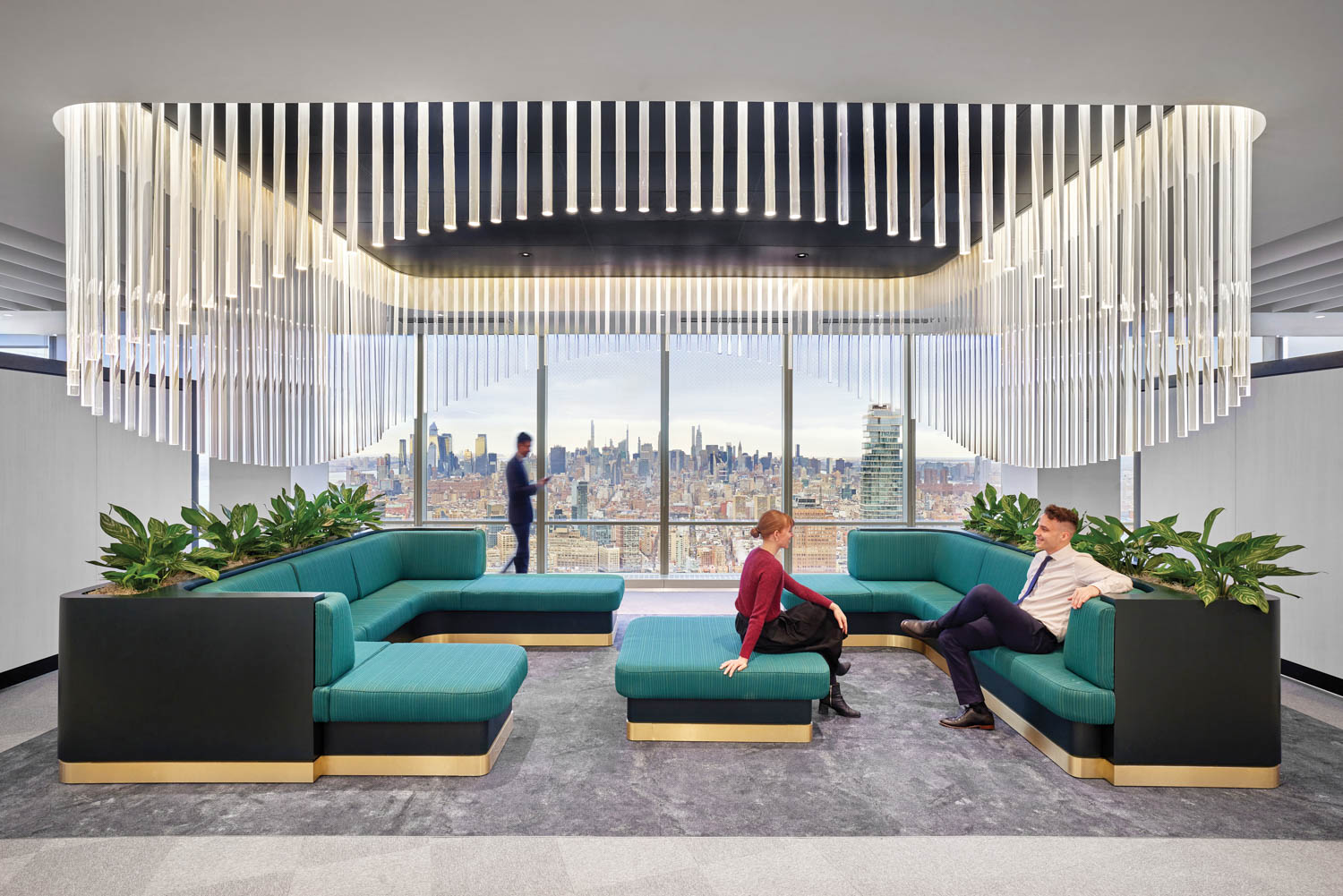
Flexible workspace designs facilitate collaboration and adaptability for growing teams
2. Strategic Neighborhood Selection
Choosing the right neighborhood for is about aligning location with your business objectives and team needs. Here’s how different NYC areas stack up for scaling companies:
Midtown Manhattan: Best for established companies needing proximity to clients and partners. Average asking rent: $75-85/sq ft.
Downtown/Financial District: Ideal for fintech and professional services. Often 15-20% cheaper than Midtown with excellent transit access.
Brooklyn (DUMBO/Downtown): Perfect for creative industries and tech startups. Rents typically 30-40% lower than Manhattan with a growing talent pool.
Long Island City: Emerging as a top choice for companies wanting Manhattan proximity at Queens prices. One subway stop from Midtown with rents 40-50% below Manhattan averages.
3. Data-Driven Space Planning
Successful office expansion starts with understanding your actual space utilization. Before committing to new space, conduct a thorough analysis:
- Current Utilization: Track desk usage, meeting room occupancy, and collaboration space effectiveness
- Growth Projections: Factor in hiring plans, remote work policies, and seasonal fluctuations
- Space Efficiency: Modern office designs typically allocate 150-175 sq ft per person, down from 250 sq ft a decade ago
Market Insights: NYC’s Tale of Two Office Markets
The current commercial real estate landscape presents interesting contrasts. Recent reports show significant valuation shifts, with some properties like Charles Cohen’s 750 Lexington Avenue receiving a $41 million valuation—a dramatic drop from its $300 million valuation in 2015. Meanwhile, premium assets continue to command top dollar, as seen in Scott Rechler’s $1 billion deal for 590 Madison Avenue, marking NYC’s largest investment sale in three years.
Timing Your Expansion: The 18-Month Rule
One of the biggest mistakes growing companies make is waiting too long to expand. By the time you feel cramped, it’s often too late to find and build out ideal space without disruption. Follow the 18-month rule:
- Months 1-6: Identify growth triggers and begin market research
- Months 6-12: Engage brokers, tour spaces, and negotiate terms
- Months 12-18: Execute lease, complete build-out, and transition teams
This timeline ensures you’re never forced into suboptimal decisions due to time pressure.
Leveraging Technology and Professional Services
Modern office expansion requires more than just finding square footage. Successful companies integrate technology and professional services throughout the process:
Space Planning Software: Tools like SpaceIQ or Wisp help visualize layouts and test different configurations before committing to construction.
Workplace Analytics: Sensors and booking systems provide real-time data on how your current space is used, informing smarter expansion decisions.
Facilities Management: Professional facilities management becomes crucial as you scale across multiple locations. Having a partner who can coordinate maintenance, security, and daily operations across sites saves significant time and reduces operational complexity.

Modern office interiors emphasize flexibility and adaptability to support changing business needs
Financial Strategies for Smart Scaling
Expanding your office footprint requires careful financial planning. Here are strategies that help companies maintain flexibility while managing costs:
Sublease Options: Include sublease rights in your agreements. If growth slows, you can offset costs by subletting excess space.
Phased Expansion Rights: Negotiate options to take additional floors or adjacent spaces at predetermined rates. This locks in expansion possibilities without immediate commitment.
Blend and Extend: When approaching capacity, negotiate with current landlords to extend your lease in exchange for additional space at favorable rates.
Current Leasing Activity Surge
Manhattan office leasing has shown strong momentum recently. According to The Real Deal’s latest data, major tenants continue securing significant spaces, with telecommunications companies and law firms leading the charge in lease volumes exceeding 200,000 square feet. This activity indicates renewed confidence in the commercial property for lease market and growing demand for quality commercial space for rent.
Case Study: From 50 to 500 Employees
Let’s examine how a fictional fintech company, “GrowthCo,” successfully scaled from 50 to 500 employees over three years:
Year 1: Started with 8,000 sq ft in Flatiron (traditional 5-year lease)
Year 2: Added 4,000 sq ft of flexible space in the same building for a new product team
Year 3: Expanded to 45,000 sq ft in FiDi, maintaining Flatiron space as a satellite office
Key decisions that made this work:
- Negotiated expansion options in the original lease
- Used flexible space to test team dynamics before committing to larger footprint
- Chose FiDi for main expansion due to 25% cost savings and proximity to financial partners
- Maintained original space for continuity and as a midtown presence
The Human Side of Office Expansion
While metrics and strategies are crucial, successful office expansion ultimately comes down to people. Consider these human factors:
Change Management: Communicate expansion plans early and often. Include team members in space planning decisions to increase buy-in.
Commute Impact: Analyze how location changes affect your team’s commutes. Even a 10-minute difference can impact retention.
Culture Preservation: Design new spaces to reinforce company culture. If collaboration is key, ensure the new space facilitates it even better than the old.
Market Developments and Infrastructure
Recent developments show continued investment in NYC’s commercial real estate for lease sector. Bisnow reports significant refinancing activity, including Paramount Group’s $900M refinancing at 1301 Sixth Avenue following major tenant signings. Additionally, WeWork’s expansion with a new 55,000 square foot coworking space at 245 Fifth Avenue demonstrates the ongoing evolution of flexible workspace options.
Looking Ahead: Future-Proofing Your Expansion
As we look toward the future of NYC commercial real estate, several trends are shaping smart expansion strategies:
Hybrid-First Design: Spaces designed for 60-70% daily occupancy with hot-desking and collaboration zones becoming the norm.
Sustainability Requirements: Local Law 97 and similar regulations make energy-efficient buildings increasingly important for long-term cost management.
Neighborhood Evolution: Keep an eye on emerging areas like the Bronx waterfront and deeper Queens, where infrastructure investments are creating new commercial hubs.
Your Next Steps
Scaling your NYC office space doesn’t have to be overwhelming. Start with these actionable steps:
- Conduct a space utilization audit of your current office
- Create 18-month and 3-year headcount projections
- Identify must-have amenities and nice-to-have features
- Research neighborhoods that align with your business needs and budget
- Engage professional support early in the process
Remember, the goal isn’t just to find more commercial property for lease near me—it’s to create an environment that supports your team’s best work while maintaining the flexibility to adapt as you grow. By approaching expansion strategically, you can turn real estate from a fixed cost into a competitive advantage.
Whether you’re planning your first expansion or your fifth, the key is starting early, staying flexible, and partnering with solutions providers who understand the unique challenges of scaling in NYC. The companies that thrive are those that view office expansion not as a necessary evil, but as an opportunity to build something better.
Ready to scale smart? Connect with Nomad Group’s team of commercial real estate experts who specialize in helping high-growth companies navigate NYC office expansion. From finding the perfect commercial space for rent to managing your facilities as you grow, we’re here to make your expansion journey seamless.
Let’s elevate your workspace—and your future.
Partner with Nomad Group for expert guidance, full-scale support and an enjoyable experience that prepares your team for a thriving future.
Get started
Featured resources
From commercial real estate fundamentals to extensive reports, stay in the know with Nomad Group’s insights, strategies and expert perspectives on office leasing.
Explore resources


Customers Over Everything: Ditch the Short-Term Profit Trap & Build Durable Growth
By Matthew DeRose – CEO, Nomad Group In hip‑hop, “Money over everything” might be a flex. In business, it’s a…

From Flex to Flagship: Knowing When to Make the Move
By Matthew DeRose – CEO, Nomad Group Coworking vs. Private Office Space: What CEOs Should Really Be Thinking About When…