From Flex to Flagship: Knowing When to Make the Move
By Matthew DeRose – CEO, Nomad Group
Coworking vs. Private Office Space: What CEOs Should Really Be Thinking About
When people think about coworking spaces, the first thing that usually springs to mind is convenience (and maybe WeWork).
Coworking spaces allow companies to jump right in. There is no need to hire movers or spring for a long-term lease. Companies can find a space that fits and generally start working there within a few weeks, if not sooner. And of course, everything they need is already there: the electricity and internet are turned on, the desks, computers, and printers are in place, and the all-important coffee bar/lounge area is ready for happy hour.
For many small companies just starting out, coworking spaces are ideal in that they meet all your needs at a fraction of the cost of private office space.
But if your company is growing, or if you’re a CEO thinking long-term about performance, retention, and brand perception, that convenience comes at a price.

Crunching the Numbers
Coworking is a business, and like any business, the goal is to turn a profit. These spaces have overhead: rent, buildout, amenities, and operations. The way coworking providers stay afloat is by packing in as many tenants as possible.
That means less privacy. More distraction. Less brand control. And ironically, higher costs the moment you scale.
In NYC, coworking can cost $700 to $1,000 per employee/month. For a 10-person team, that’s $8,500/month, all in.
Now compare that to a traditional lease:
- A private office in Midtown with quality finishes might cost $50 per square foot per year, including bills and taxes.
- For 10 people, you’ll need 1,500 square feet (about 150 SF/person).
- 1,500 SF × $50 = $75,000/year or $6,250/month.
That’s $2,250/month saved and that’s just the starting point. Factor in free rent, tenant improvement (TI) capital, and the ability to scale your team without scaling rent proportionally, and the cost advantage only widens.
What Most CEOs Overlook
Culture ROI > Convenience
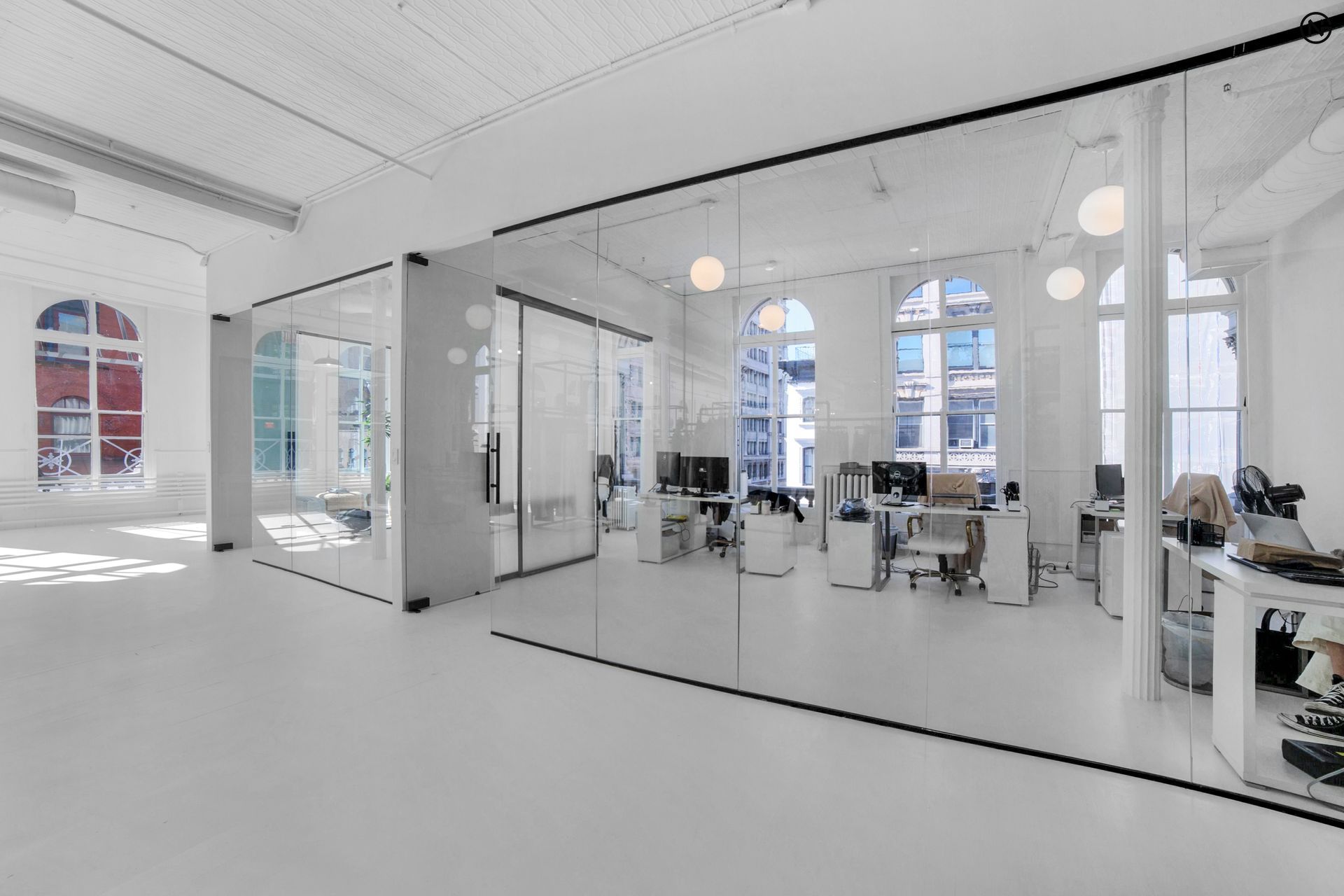
Your office space is more than a workplace, it’s a culture multiplier. Coworking environments are great for freelancers and early-stage founders, but if you’re building a company with a distinct mission, brand, and culture, a private space allows you to live that brand every day. It’s an investment in your people, your productivity, and your long-term retention.
The Brand Experience Is Physical Too
From your reception area to your conference rooms, your space reflects your vision and values. Coworking spaces sell their brand, not yours. When you lease privately, you control the impression your clients, partners, and future hires walk away with. It’s not just optics. It’s positioning.

Total Cost of Ownership (TCO) > Sticker Price
Coworking seems cheaper at first glance. But when you factor in:
- Monthly price escalation as you add team members
- Lack of build-out or brand customization
- Inability to negotiate better terms over time
- Zero equity or flexibility in the space
… it often ends up costing more.
Private leases can be structured to include:
- Build-out capital (paid by landlord)
- Free rent periods
- Early termination clauses
- Expansion options
These aren’t just line items, they’re strategic levers that reduce your TCO while increasing long-term value.
Your Team’s Growth = Your Rent’s Decline
In coworking, each new hire adds $850–$1,000/month to your burn. In a private lease, you amortize your rent over more people, meaning each new hire lowers your cost per employee. That’s scalability done right.
Future-Proofing the Business
The best real estate strategy is one that moves with your business. A custom lease agreement with the right landlord and the right flexibility built-in (expansion rights, sublease options, etc.) can give you the agility you need without sacrificing stability.
So Who Should Stick to Coworking?
Coworking still plays a vital role for:
- Solo founders and startups under 10 people
- Teams with remote-first models who meet only a few times a month
- Companies still testing product-market fit or entering a new geography
Month-to-month flexibility can be a safety net when the future is still uncertain. And if you’re networking, recruiting, or collaborating with other startups, coworking can still be a smart call.
Rethink What’s Possible
For CEOs looking at the next 3–5 years, private office space can offer:
- Lower per-employee costs
- Cultural cohesion
- Brand alignment
- Better employee experience
- Long-term scalability
It’s not about space. It’s about setting the stage for your next phase of growth.
If you’re a CEO planning the next chapter of your company, don’t just default to coworking. Get advice, run the math, and align your space strategy with your business goals.
At Nomad, we help high-growth companies find, build, and scale office environments that feel less like rent and more like ROI.
Want to run the numbers for your team? Let’s put your growth plans on the whiteboard. Nomad Group has helped hundreds of VC-backed companies transition from coworking to culture-aligned HQs.
Reach out to see what’s possible.
Let’s elevate your workspace—and your future.
Partner with Nomad Group for expert guidance, full-scale support and an enjoyable experience that prepares your team for a thriving future.
Get started
Featured resources
From commercial real estate fundamentals to extensive reports, stay in the know with Nomad Group’s insights, strategies and expert perspectives on office leasing.
Explore resources


Customers Over Everything: Ditch the Short-Term Profit Trap & Build Durable Growth
By Matthew DeRose – CEO, Nomad Group In hip‑hop, “Money over everything” might be a flex. In business, it’s a…

From Flex to Flagship: Knowing When to Make the Move
By Matthew DeRose – CEO, Nomad Group Coworking vs. Private Office Space: What CEOs Should Really Be Thinking About When…