NYC’s Neighborhoods: The Real Stories Behind Market Shifts in 2025
The days of analyzing New York City’s commercial real estate market through broad brushstrokes are over. While industry headlines focus on citywide statistics, sophisticated investors are discovering extraordinary opportunities hidden within the city’s evolving micro-market landscape.
Recent analysis reveals that NYC’s commercial property performance increasingly depends on hyper-local factors rather than borough-wide trends. This fundamental shift is creating unprecedented arbitrage opportunities for those equipped with neighborhood-level intelligence.
The End of One-Size-Fits-All Market Analysis
Forget everything you thought you knew about NYC commercial real estate investment strategies. The traditional approach of evaluating properties by borough or even by major neighborhood has become dangerously obsolete.
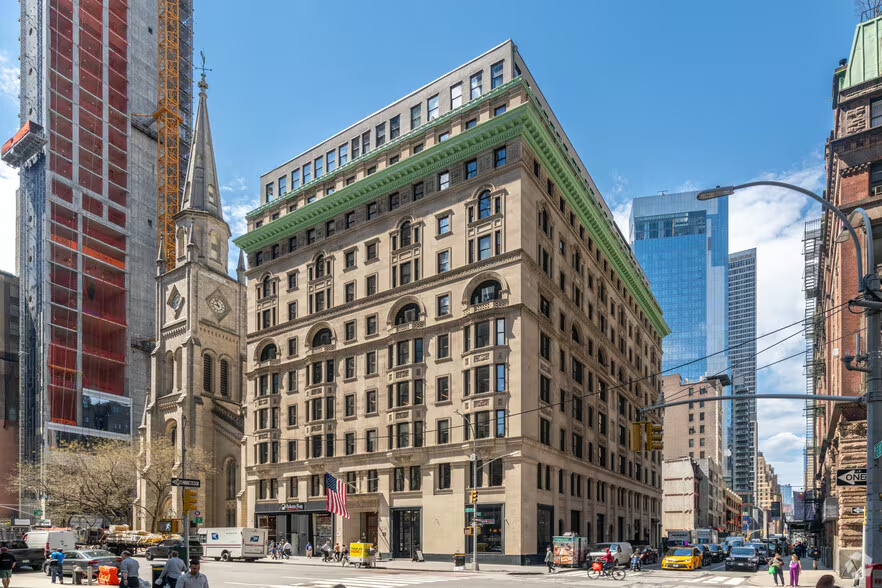
Consider the stark reality: While Manhattan’s overall office vacancy hovers around 16%, specific submarkets tell dramatically different stories. Midtown South maintains near 95% occupancy rates for Class A properties, while the Financial District grapples with 22% vacancy yet simultaneously experiences accelerated conversion activity.
This fragmentation extends beyond office space. Brooklyn’s industrial corridors are posting 12% annual rent growth in select micro-markets, driven by e-commerce distribution demands and last-mile delivery infrastructure needs.
Data-Driven Micro-Market Intelligence
The numbers paint a compelling picture of market segmentation. NYC’s office demand index rose 7.4% year-over-year through September 2024, but this aggregate figure masks the true story unfolding at the street level.
Williamsburg’s Commercial Evolution
Formerly industrial Williamsburg now commands premium rents for creative office space, with tech startups and media companies driving demand for collaborative work environments. The neighborhood’s transformation from manufacturing hub to innovation district represents a textbook case in micro-market evolution.
DUMBO’s Waterfront Advantage
DUMBO continues attracting commercial real estate investment due to its unique combination of proximity to Manhattan, waterfront views, and modern infrastructure. Office spaces here command premiums of 15-20% over comparable properties just blocks away.
Financial District’s Conversion Wave
While vacancy rates appear concerning on paper, the Financial District is experiencing a renaissance through office-to-residential conversions. This trend creates opportunities for commercial real estate agents and brokers specializing in transitional markets.
Strategic Implications for Commercial Property Stakeholders
Commercial real estate listings must now reflect micro-market positioning rather than generic neighborhood descriptions. The most successful commercial real estate brokers are developing expertise in specific corridors, understanding everything from zoning nuances to transportation accessibility.
Investors can no longer rely on broad market metrics when evaluating commercial property opportunities. The emerging trends include:
Hybrid Work Hub Development
Neighborhoods facilitating work-life balance are gaining competitive advantages. Areas with residential density, quality dining, and flexible office options are outperforming traditional business districts.

Climate Resilience Premium
Properties in flood-resistant areas or buildings with advanced environmental systems command higher rents and experience lower vacancy rates. This trend is particularly pronounced in waterfront commercial districts.
Connectivity Infrastructure
Locations with robust 5G coverage and fiber infrastructure attract technology tenants willing to pay premium rents for operational advantages.
15-Minute Commercial Districts
Emerging micro-markets where employees can work, dine, shop, and access transportation within walking distance are demonstrating superior leasing velocity and tenant retention.
Investment Strategy Refinement
Navigating this fractured market landscape requires intelligence that extends far beyond traditional commercial real estate analysis. Successful investors are developing block-by-block knowledge that considers:
- Zoning overlay districts and their development implications
- Transportation infrastructure improvements and their timing
- Demographic shifts and their impact on commercial demand
- Local business ecosystem development and tenant mix evolution
The industrial real estate sector exemplifies this micro-market approach. With billions in sales and millions of square feet under construction in the NYC metropolitan region, specific asset classes thrive while others struggle, even within the same neighborhood.
The Arbitrage Opportunity
This market fragmentation creates significant arbitrage opportunities for informed investors. Properties in transitional micro-markets often trade at discounts to their long-term potential, while assets in established micro-markets may offer stable returns with limited upside.
Commercial real estate agents who develop micro-market expertise position themselves as indispensable resources for both tenants and landlords navigating this complex landscape.
Future-Proofing Commercial Real Estate Strategies
The trend toward micro-market analysis isn’t temporary; it represents a permanent evolution in how commercial real estate markets function in dense urban environments.
Investors must develop capabilities for:
- Real-time micro-market data analysis
- Neighborhood-specific tenant relationship building
- Local regulatory environment monitoring
- Infrastructure development tracking
Positioning for Long-Term Success
The most successful commercial property investors and commercial real estate brokers of 2025 will be those who recognize that New York City doesn’t have a single commercial real estate market—it has dozens of interconnected micro-markets, each with distinct characteristics, opportunities, and risks.

This granular approach to market analysis enables more precise investment decisions, better tenant matches, and superior risk management. For commercial real estate professionals willing to develop this expertise, the current market transition represents an unprecedented opportunity to establish competitive advantages.
Understanding these micro-market dynamics isn’t just about identifying opportunities; it’s about developing the analytical framework necessary to thrive in New York City’s evolved commercial real estate landscape.
References and Further Reading
Let’s elevate your workspace—and your future.
Partner with Nomad Group for expert guidance, full-scale support and an enjoyable experience that prepares your team for a thriving future.
Get started
Featured resources
From commercial real estate fundamentals to extensive reports, stay in the know with Nomad Group’s insights, strategies and expert perspectives on office leasing.
Explore resources



Customers Over Everything: Ditch the Short-Term Profit Trap & Build Durable Growth
By Matthew DeRose – CEO, Nomad Group In hip‑hop, “Money over everything” might be a flex. In business, it’s a…

From Flex to Flagship: Knowing When to Make the Move
By Matthew DeRose – CEO, Nomad Group Coworking vs. Private Office Space: What CEOs Should Really Be Thinking About When…