Scaling in Tight Spaces: NYC’s Pioneering Micro-Lease Strategy
Picture this: A fintech startup in Manhattan just secured $20 million in Series A funding. Their team is expanding from 15 to 50 employees within six months. Traditional wisdom says it’s time to sign a 10,000 square foot lease in Midtown. But what if that conventional approach is precisely what’s holding growth companies back?
Welcome to the micro-leasing revolution—where smaller, smarter spaces are outperforming traditional office expansions for NYC’s most innovative companies.
Understanding Micro-Leasing: Beyond the Buzzword
Micro-leasing isn’t simply about renting smaller spaces. It’s a sophisticated real estate strategy that combines:
1. Modular Space Design
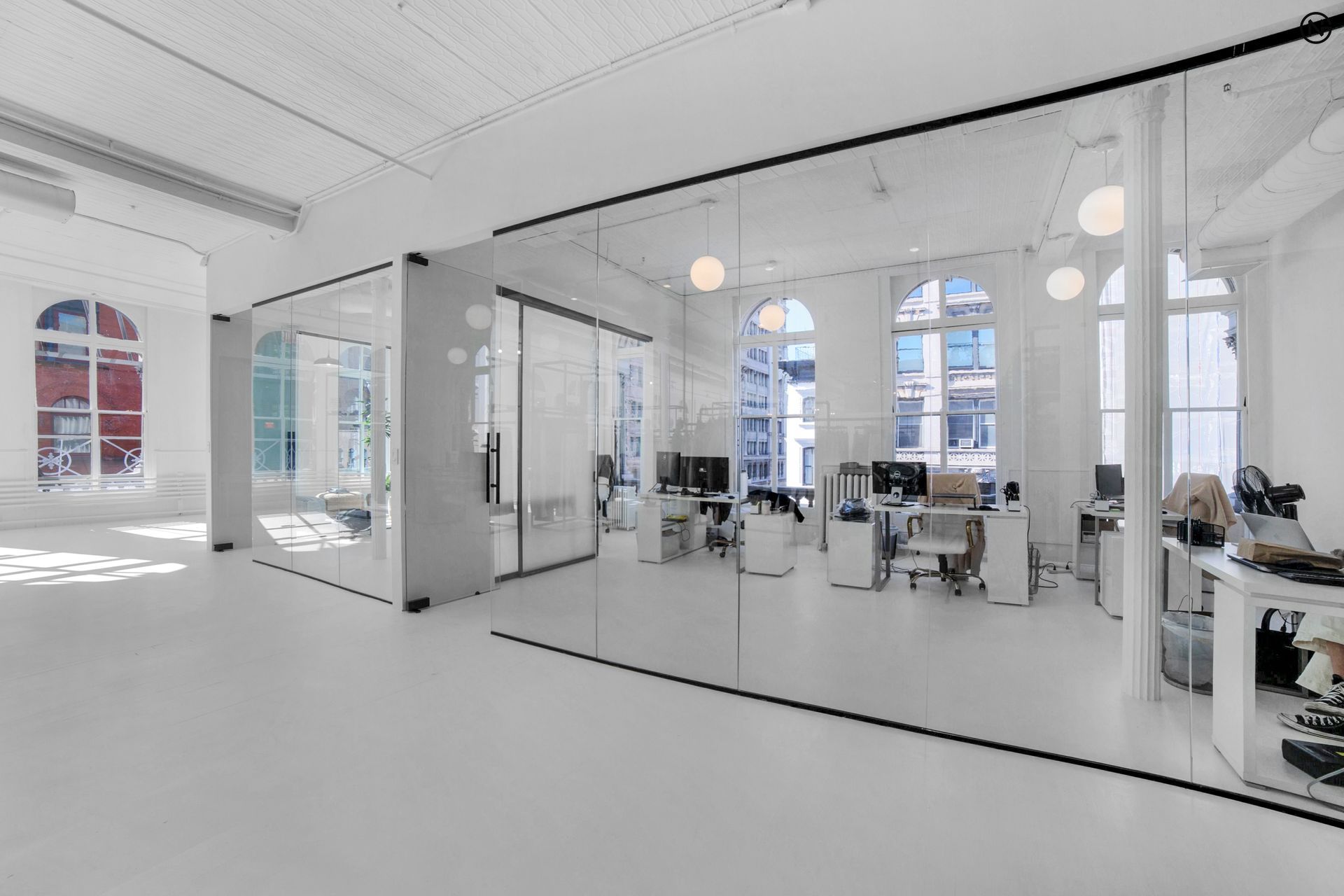
Instead of one large office, companies secure multiple smaller units (typically 1,000-3,000 sq ft) that can be:
- Connected or separated based on team needs
- Sublet during slower periods
- Configured for specific functions (client meetings, deep work, collaboration)
2. Flexible Term Structures
Unlike traditional 5-10 year commitments, micro-leases offer:
- 6-24 month primary terms
- Monthly expansion/contraction options
- Built-in renewal rights with pre-negotiated rates
3. Usage-Based Pricing Models
Pay for what you actually use:
- Peak hour premiums for prime meeting spaces
- Off-peak discounts for overnight or weekend access
- Shared amenity credits across multiple locations
The Strategic Advantages Driving NYC Adoption
According to recent market data, mid-sized tech firms in NYC are actively seeking smaller, more adaptable office spaces. This trend is being accelerated by several factors in the current commercial real estate landscape.
As reported by Commercial Observer, buildings near transit hubs such as Grand Central Terminal and Pennsylvania Station are “outperforming in both return-to-office compliance and leasing velocity,” with flexible space options leading this resurgence. The ability to quickly adapt to changing business conditions has become a critical competitive advantage.
Financial Flexibility That Scales With Revenue
Traditional leases lock companies into fixed costs regardless of business performance. Micro-leasing aligns real estate expenses with actual growth trajectories:
- Scenario A: Your user acquisition slows in Q3. Reduce space by 30% within 30 days.
- Scenario B: You land a major enterprise client. Expand into adjacent units immediately.
- Scenario C: Market conditions shift. Pivot to a distributed model without lease penalties.
One portfolio company we work with used this flexibility to navigate the recent tech downturn, reducing their real estate burn by 45% while maintaining operational efficiency.
Talent Attraction Through Location Diversity
Micro-leasing enables presence in multiple neighborhoods simultaneously. Instead of one 10,000 sq ft office in Midtown, companies are opting for:
- 3,000 sq ft in Flatiron (engineering hub)
- 2,000 sq ft in Soho (creative teams)
- 1,500 sq ft in Brooklyn (customer success)
- 1,000 sq ft in FiDi (executive meetings)
This distributed approach reduces average commute times by 22 minutes and expands the talent pool by 3x, according to our internal analysis.

Operational Agility for Uncertain Markets
The ability to rapidly reconfigure space provides competitive advantages:
Client Story: A B2B software company used micro-leasing to test three different office configurations over 18 months:
- Open collaboration space (months 1-6)
- Hybrid hot-desking model (months 7-12)
- Team pod structure (months 13-18)
They discovered the pod structure increased productivity by 28% and employee retention by 15%—insights impossible to gain with a traditional lease.
NYC’s Micro-Lease Ecosystem: Market Intelligence
Supply Side Dynamics
The commercial real estate market is responding to this shift in demand. Currently, NYC offers:
- Manhattan: Significant square footage of micro-leasable space, with buildings near transit hubs leading adoption
- Brooklyn: Growing inventory with quarterly increases in availability
- Queens: Emerging market with developing opportunities
As The Real Deal reports in their coverage of recent office leasing activity, smaller footprint leases are becoming increasingly common, with flexible workspace providers expanding their offerings to meet this demand.
Demand Drivers
Recent data shows a significant increase in demand for flexible lease terms in NYC’s commercial sector. Key factors include:
- Economic Uncertainty: CFOs increasingly cite flexibility as a top real estate priority
- Hybrid Work Models: Average office utilization remains below pre-pandemic levels
- Capital Efficiency: Investors favor variable over fixed cost structures
- Speed to Market: Micro-spaces can be occupied 75% faster than traditional buildouts
Pricing Advantages
While micro-leases command 15-20% premium per square foot, total occupancy costs decrease by 30-40% through:
- Eliminated buildout expenses
- Reduced unused space
- Shared amenity costs
- Lower utility commitments
Implementation Framework: Your Micro-Lease Transition
Phase 1: Space Audit & Strategy (Weeks 1-2)
Analyze Current Utilization:
- Track actual vs. allocated space usage
- Identify peak occupancy patterns
- Map team collaboration needs
- Calculate true cost per employee
Define Success Metrics:
- Target utilization rate (aim for 80%+)
- Flexibility requirements by department
- Growth scenarios (bear/base/bull cases)
- Cultural priorities (collaboration vs. focus)
Phase 2: Market Exploration (Weeks 3-4)
When exploring neighborhoods for micro-lease opportunities, consider:
Location Strategy:
- Proximity to client clusters
- Transportation hub access
- Talent pool demographics
- Complementary business ecosystems
Building Evaluation:
- Existing micro-lease inventory
- Landlord flexibility track record
- Technology infrastructure
- Shared amenity quality

Phase 3: Negotiation & Structure (Weeks 5-6)
Key Terms to Secure:
- Expansion/contraction rights
- Subletting permissions
- Flexible payment schedules
- Technology upgrade allowances
Risk Mitigation:
- Performance-based rent adjustments
- Force majeure protections
- Assignment rights for M&A scenarios
- Coordinated lease expirations
Phase 4: Transition & Optimization (Weeks 7-12)
Change Management:
- Communicate vision clearly
- Pilot with volunteer teams
- Gather continuous feedback
- Iterate based on data
Performance Tracking:
- Space utilization metrics
- Employee satisfaction scores
- Productivity indicators
- Cost per revenue dollar
Case Study: From 15,000 to 9,000 Square Feet—And Thriving
Company: B2B Marketing Platform (name withheld)
Challenge: 15,000 sq ft Midtown lease at 45% utilization
Solution: Micro-lease portfolio across 4 locations
Results:
- 40% reduction in real estate costs
- 25% increase in employee satisfaction
- 50% faster hiring velocity
- 3x improvement in client meeting bookings
Overcoming Common Objections
“We Need Consistent Brand Experience”
Micro-leasing actually enhances brand consistency through:
- Standardized design elements across locations
- Unified technology platforms
- Coordinated amenity programs
- Flexible branding opportunities
“Managing Multiple Locations Seems Complex”
Modern solutions simplify multi-location management:
- Integrated booking systems
- Centralized IT infrastructure
- Unified vendor relationships
- Single-source billing options
“What About Company Culture?”
Distributed micro-offices can strengthen culture by:
- Creating intentional gathering spaces
- Enabling team-specific environments
- Reducing commute friction
- Increasing cross-functional interactions
The Future of Work: Beyond Traditional Boundaries
As we look toward the future, micro-leasing represents more than a real estate trend—it’s a fundamental reimagining of how businesses operate in expensive urban markets.
According to Commercial Observer’s analysis of recent market trends, buildings offering flexible arrangements are seeing renewed leasing activity, with companies prioritizing adaptability over traditional long-term commitments.
Emerging Innovations:
- AI-powered space optimization
- Streamlined lease contracts
- Virtual reality office tours
- Predictive occupancy modeling
Market Predictions:
- Growth companies will increasingly adopt hybrid micro-leasing strategies
- Average lease terms will continue to shrink
- Per-square-foot premiums will stabilize as supply increases
- Technology will enable seamless multi-location experiences
Your Next Step: Strategic Space Evaluation
The question isn’t whether micro-leasing is right for your business—it’s how quickly you can leverage this strategy to accelerate growth while managing risk.
Action Items for This Week:
- Analyze your current space utilization (most companies discover 40%+ waste)
- Model three growth scenarios with flexible vs. fixed space costs
- Identify 2-3 potential micro-lease locations for pilot programs
- Calculate potential savings and reinvestment opportunities
Ready to explore how micro-leasing can transform your approach to scaling in NYC? The data is clear: Companies embracing micro-leasing report higher growth rates and better capital efficiency than those locked into traditional leases. The only question is: Will you be among the pioneers or the followers?
Further Reading & Resources
Let’s elevate your workspace—and your future.
Partner with Nomad Group for expert guidance, full-scale support and an enjoyable experience that prepares your team for a thriving future.
Get started
Featured resources
From commercial real estate fundamentals to extensive reports, stay in the know with Nomad Group’s insights, strategies and expert perspectives on office leasing.
Explore resources


Customers Over Everything: Ditch the Short-Term Profit Trap & Build Durable Growth
By Matthew DeRose – CEO, Nomad Group In hip‑hop, “Money over everything” might be a flex. In business, it’s a…

From Flex to Flagship: Knowing When to Make the Move
By Matthew DeRose – CEO, Nomad Group Coworking vs. Private Office Space: What CEOs Should Really Be Thinking About When…