The 5-Stage Framework for Scaling Your NYC Office Space
You’ve just closed your Series B. Your headcount is doubling every six months. And suddenly, that 3,000 square foot startup loft in Chelsea feels like a sardine can. Sound familiar?
After helping hundreds of high-growth companies navigate NYC’s commercial real estate market, we’ve identified a proven framework that transforms office expansion from reactive scrambling to proactive planning.

The Hidden Cost of Reactive Real Estate Decisions
Here’s a statistic that should grab your attention: Companies that make reactive real estate decisions spend 37% more on occupancy costs over five years compared to those with strategic plans. That’s millions in unnecessary expenses that could have funded product development or talent acquisition.
The challenge? Most scaling companies treat commercial real estate as an afterthought. But in NYC’s competitive market, where prime commercial space for rent gets snapped up months in advance and lease negotiations can take 90-120 days, waiting until you’re bursting at the seams is a recipe for poor decisions and inflated costs.
The 5-Stage Scaling Framework
Stage 1: The Foundation Phase (10-25 employees)
Space Requirements: 150-200 SF per person
Typical Size: 2,500-5,000 SF
Key Features: Open layout, 1-2 small meeting rooms, flexible common area
At this stage, flexibility trumps everything. You need short-term lease options (2-3 years) with expansion rights. Look for spaces with modular furniture systems and minimal build-out requirements. Neighborhoods like Flatiron and Union Square offer the perfect blend of accessibility and startup energy.
Strategic Move: Negotiate a Right of First Offer (ROFO) on adjacent spaces. This gives you priority access to expansion without committing prematurely.
Stage 2: The Growth Phase (25-75 employees)
Space Requirements: 125-175 SF per person
Typical Size: 5,000-12,000 SF
Key Features: Mix of open and private spaces, 3-5 conference rooms, dedicated phone booths
This is where most companies stumble. You’re growing fast but not quite ready for a full floor. The solution? Look for partial floor opportunities with expansion options. Sublease opportunities from larger companies can offer premium build-outs at discounted rates.
Strategic Move: Implement a “space utilization audit” every quarter. Track actual vs. planned occupancy to refine your growth projections.
Stage 3: The Expansion Phase (75-150 employees)
Space Requirements: 125-150 SF per person
Typical Size: 12,000-20,000 SF
Key Features: Department zones, 6-10 meeting rooms, wellness amenities, dedicated reception
Congratulations, you’re ready for a full floor! But here’s where strategy really matters. Instead of taking any available 15,000 SF floor, think about your 3-year trajectory. Can you take 20,000 SF and sublease the excess? This positions you for internal expansion without another disruptive move.
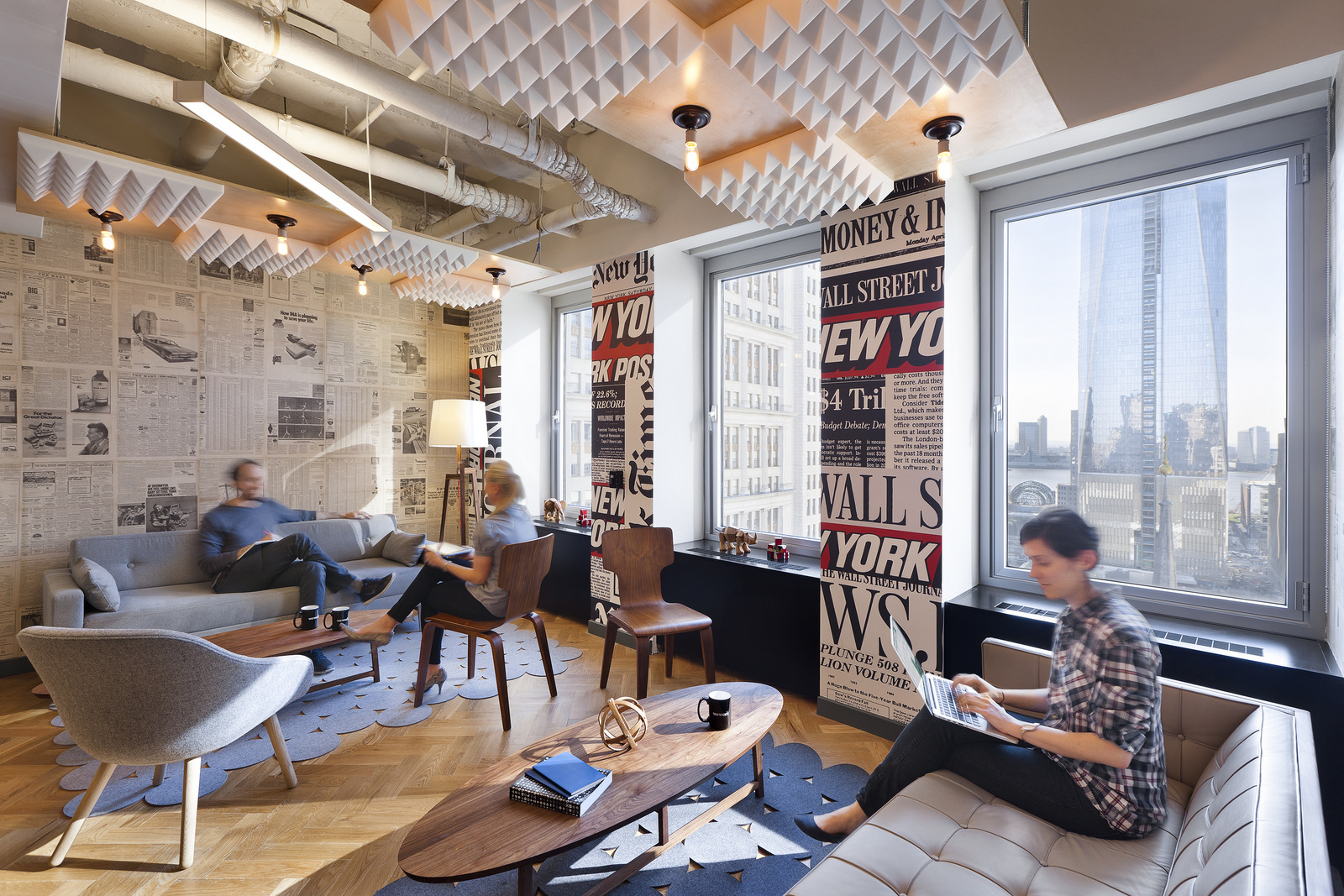
Collaborative workspace designed for growing teams and strategic scaling
Strategic Move: Negotiate a “blend and extend” option that allows you to add adjacent floors while extending your overall lease term for better economics.
Stage 4: The Multi-Floor Phase (150-500 employees)
Space Requirements: 120-140 SF per person
Typical Size: 20,000-70,000 SF
Key Features: Floor-to-floor connectivity, specialized spaces (labs, studios), executive areas
You’re now a major space user with real negotiating power. Consider strategic neighborhood selection based on talent pools and client proximity. Buildings with large floor plates (15,000+ SF) provide better efficiency than boutique properties.
Strategic Move: Structure your lease with a “waterfall” expansion schedule: taking additional floors at predetermined dates with pre-negotiated economics.
Stage 5: The Enterprise Phase (500+ employees)
Space Requirements: 100-125 SF per person
Typical Size: 70,000+ SF
Key Features: Campus environment, multiple building options, brand expression
At this scale, you’re evaluating headquarters options. Should you anchor a new development? Take a naming-rights deal? The key is balancing brand presence with operational flexibility.
Strategic Move: Explore “hub and spoke” models with a flagship HQ and satellite offices for different functions or teams.
The Technology Factor in Scaling
Today’s scaling strategies must account for hybrid work realities. Smart companies are using technology to maximize their commercial property for lease efficiency:
- Occupancy sensors reveal that most offices peak at 60-70% capacity
- Booking systems for desks and meeting rooms increase utilization by 40%
- Space planning software helps model different growth scenarios
One client reduced their space needs by 30% through strategic hybrid policies and hot-desking technology, saving $2.4 million annually.
Market Timing and Negotiation Leverage
NYC’s commercial real estate for lease market operates in cycles. According to recent Moody’s analysis, with overall Manhattan vacancy at historic highs but quality space still competitive, timing your moves strategically can yield significant advantages:
Q1-Q2 Negotiations: Landlords have fresh budgets and are eager to show leasing momentum. You’ll find more concession packages and flexibility.
Q3-Q4 Negotiations: Year-end pressure can work in your favor, especially for spaces that have been vacant 6+ months.
Leverage Points:
- Credit tenant status (for Series B+ companies)
- Longer lease terms (5-7 years) for better economics
- Competitor buildings as alternatives
- Immediate occupancy capability
The Sustainability Advantage
Here’s a trend that’s reshaping scaling strategies: sustainable buildings aren’t just good PR, they’re becoming essential for talent retention and investor relations. LEED-certified buildings in NYC show:
- 23% lower operating costs
- 27% higher employee satisfaction
- 13% increase in lease renewal rates
When evaluating expansion options, factor in sustainability metrics. They’re increasingly correlated with long-term value creation.

Strategic framework for business scaling and growth planning across all phases
Common Scaling Pitfalls to Avoid
- The “Perfect Space” Trap: Waiting for ideal conditions while your team suffers in cramped quarters
- Overcommitting on Day One: Taking 30,000 SF when you need 15,000 SF “just in case”
- Ignoring Commute Patterns: Choosing prestige addresses that add 20+ minutes to average commutes
- Neglecting Exit Strategies: Not negotiating sublease and assignment rights
- DIY Negotiations: Attempting complex commercial property for lease negotiations without expert representation
Your Scaling Action Plan
- Map Your Growth Trajectory: Plot headcount projections for 12, 24, and 36 months
- Define Space Standards: Establish SF per person ratios for different roles
- Create Trigger Points: Set clear metrics for when to begin space searches
- Build Your Team: Engage real estate advisors 6-9 months before you need to move
- Develop Options: Always evaluate 3-5 viable alternatives to strengthen negotiations
The Strategic Advantage
Companies that implement strategic real estate planning see measurable benefits:
- 42% reduction in per-employee occupancy costs
- 31% improvement in employee retention
- 3.2x faster time-to-occupy for new spaces
- 28% better lease terms through proactive negotiations
In NYC’s dynamic market, your commercial property for lease near me strategy can be either a growth accelerator or a hidden drag on performance. The difference lies in planning, timing, and execution.
Moving Forward
Scaling your office space in New York City doesn’t have to be a reactive, stressful experience. With the right framework and strategic approach, each expansion becomes an opportunity to optimize your operations, enhance your culture, and position your company for the next stage of growth.
The companies winning in NYC’s commercial real estate market aren’t just finding space, they’re crafting environments that attract talent, impress clients, and adapt to changing needs. They treat real estate not as overhead, but as a strategic asset that drives business value.
As the NYC Comptroller’s report shows, understanding market trends and maintaining flexibility in your commercial real estate for lease approach will be crucial for companies navigating the evolving landscape of NYC office space.
Ready to transform your approach to office scaling? Let’s explore the right neighborhoods and identify opportunities that align with your business goals. Because in the world of NYC commercial real estate, the best strategy isn’t just about where you are today; it’s about positioning yourself for where you’ll be tomorrow.
Let’s elevate your workspace—and your future.
Partner with Nomad Group for expert guidance, full-scale support and an enjoyable experience that prepares your team for a thriving future.
Get started
Featured resources
From commercial real estate fundamentals to extensive reports, stay in the know with Nomad Group’s insights, strategies and expert perspectives on office leasing.
Explore resources


Customers Over Everything: Ditch the Short-Term Profit Trap & Build Durable Growth
By Matthew DeRose – CEO, Nomad Group In hip‑hop, “Money over everything” might be a flex. In business, it’s a…

From Flex to Flagship: Knowing When to Make the Move
By Matthew DeRose – CEO, Nomad Group Coworking vs. Private Office Space: What CEOs Should Really Be Thinking About When…