The Rise of Unicorn Lane: How Midtown South Became NYC’s Hottest Tech Corridor
Written by William Janetschek, COO and Co-Founder at Nomad
A Neighborhood Reinvented:
In a city that thrives on reinvention, a distinct sector of Manhattan is staging a quiet but powerful comeback. Midtown South, once seen as a transitional zone between Midtown’s corporate towers and Downtown’s creative lofts has rapidly evolved into the epicenter of New York’s tech ecosystem. The area is now one of the city’s most coveted commercial hubs, home to over 7,500 businesses and 135,000 jobs in industries from media to fintech. Long favored for its blend of grit and charm, Midtown South today offers an unparalleled mix of residential, office, hospitality and retail amenities, all clustered in a transit-rich corridor at the city’s core. It’s a neighborhood where startup CEOs can walk from the office to trendy hotels or Michelin-starred restaurants, and where new apartment towers are rising alongside century-old loft buildings. City officials are so confident in Midtown South’s future that they’ve launched a plan to add nearly 10,000 homes here – aiming to create a “true mixed-use community” that hums with activity 24/7.
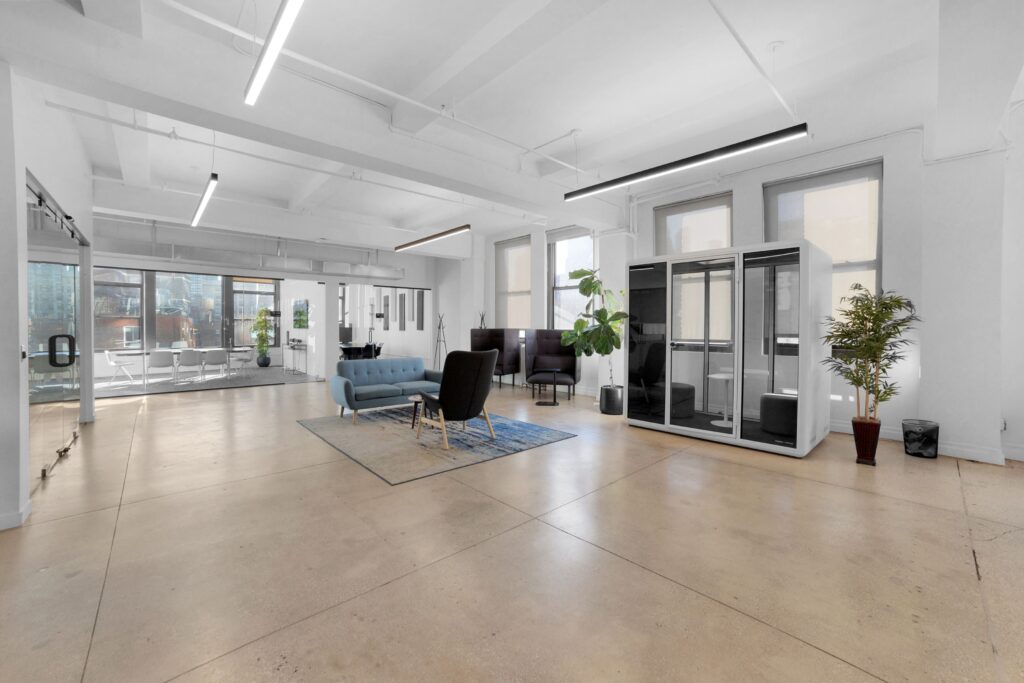
Nowhere is this transformation more evident than along the vibrant stretch of Broadway between 10th and 33rd Streets, now dubbed “Unicorn Lane.” In the past year, this stretch next to Madison Square Park has become a magnet for high-growth tech companies chasing coveted unicorn status all eager to plant their flag in the neighborhood’s thriving ecosystem. Demand for office space here is no longer cautious or speculative; everyone wants in, and it shows.
Broadway’s Pedestrian Renaissance:
“Broadway in NoMad has been reimagined as a pedestrian-friendly boulevard with outdoor dining and community seating, revitalizing the streetscape”
One of Unicorn Lane’s biggest draws isn’t inside an office at all… it’s the streetscape itself. Along this stretch of Broadway in the Flatiron/NoMad area, the city has reimagined the streets for people. Vehicular traffic is now limited or even blocked on certain streets, creating a pedestrian oasis reminiscent of a European boulevard. In a bold move under the “Broadway Vision” plan, the city permanently closed Broadway to cars between 25th and 27th Streets, installing pedestrian plazas, cafe tables, planters and bike lanes. Restaurants like La Pecora Bianca and The Smith have spilled into the open street with al fresco dining, and public seating areas under string lights invite passersby to linger.
The result is a uniquely human-centered streetscape amid Manhattan’s bustle. It’s now commonplace to see the sidewalks and former traffic lanes buzzing with professionals enjoying a midday espresso, friends gathering over after-work cocktails, or locals savoring a quiet moment on a bench. “We are excited to offer this serene spot, next to some of the city’s most dynamic outdoor dining, where people can meet up with friends, relax, and enjoy the weather,” said James Mettham, director of the local Flatiron Partnership, when the Broadway plazas first opened. The initiative, nicknamed the “NoMad Piazza”, was piloted during the pandemic and proved so popular that it’s being made permanent.
Supporters say it has bolstered neighborhood businesses and given Midtown South a public gathering place on par with Europe’s great pedestrian promenades. In short, Broadway has become an address people love to experience, not just a place to work.
A Frenzied Office Comeback:
If the outdoor cafés are Midtown South’s new living room, the office floors above are its economic engine, and they’re roaring back to life. Over the past few months, office leasing in Midtown South hasn’t just rebounded, it has surged beyond expectations. In the final quarter of 2024, the submarket saw leasing volume jump 16.5% compared to the prior quarter, and by early 2025 activity was accelerating further. Midtown South registered 1.7 million square feet of leases in a single month (May 2025), outpacing even Midtown’s traditionally dominant office district. Citywide, Manhattan is on pace for its strongest office leasing year since 2001 if current momentum holds.
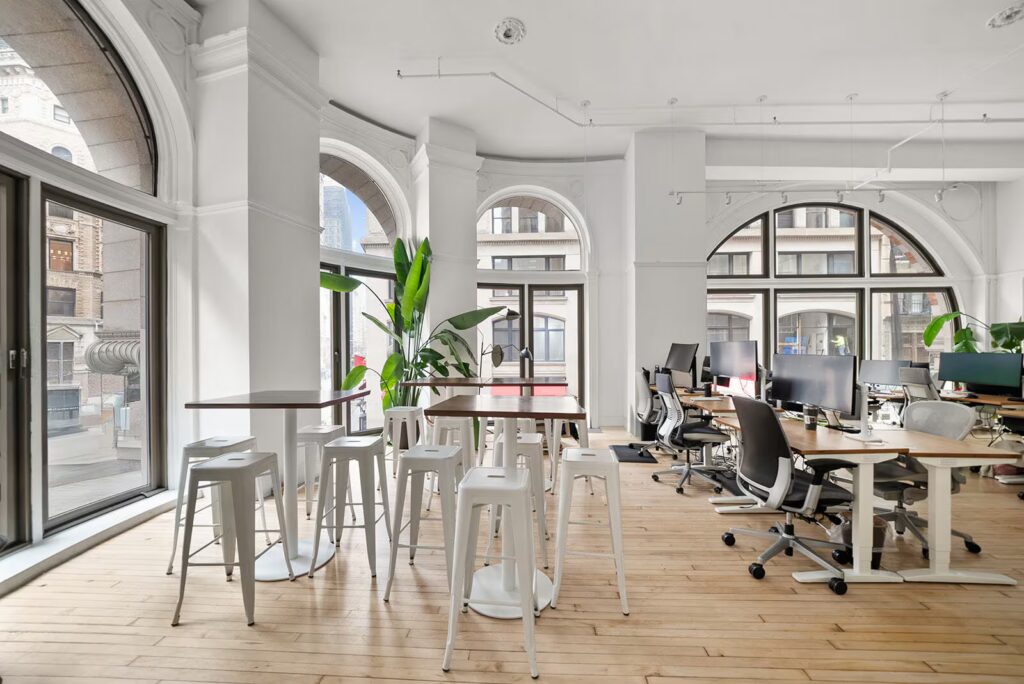
Perhaps most telling, availability rates are now tightening for the first time in years. Manhattan’s overall office availability just dipped to 15.4%, the lowest since January 2021, and brokers say Midtown South’s supply of quality spaces has shrunk dramatically. In this pocket around Broadway and Madison Square, some landlords are effectively “sold out.”
“Nomad Group’s exclusive assets at 1239 Broadway, 30 West 21st Street, 900 Broadway, and 104 West 27th Street are now fully occupied.”
It’s a common trend in Midtown South to buildings 100% leased, a reality that would’ve been hard to imagine just a year or two ago. But demand keeps rising. The market is moving quickly, and the most strategic tenants are already securing space for year 2025 and beyond.
“We’re calling it: this is the strongest tech leasing comeback Manhattan has seen in over 20 years!”
What’s truly remarkable is how competition for space has returned. For the first time since 2019, new availabilities in Midtown South are often transacting at or near full asking rents, and some are even igniting bidding wars among tenants. In Flatiron and NoMad, small-to-midsize offices under 20,000 square feet are already seeing multiple offers and bidding contests, according to market specialists.
The sharp increase in market competition is prompting some firms to take highly proactive measures. Tenants who would traditionally wait until closer to lease expiration are now renewing 1 – 2 years in advance to secure their space and avoid potential displacement. Many companies are initiating early renewal negotiations to retain access to premium locations. This marks a significant shift from the pandemic era, which was characterized by a surplus of sublease space and tenant-favorable lease terms.

Even the numbers behind Midtown South’s resurgence carry a whiff of Silicon Valley-style growth. In the first quarter of 2025 alone, tech companies leased 1.2 million square feet across Manhattan, and then another 441,000 square feet in April essentially matching 2023’s entire tech leasing volume in just four months.
While major transactions like Pinterest’s 83,000 SF lease in Flatiron, Chime’s 84,000 SF commitment at 122 Fifth Avenue, and Samsung’s 71,000 SF expansion at PENN 1 grab headlines, a significant volume of tech and AI leasing activity is concentrated in Midtown South’s Unicorn Lane. AI-driven startups and fintech firms are gravitating toward Flatiron/NoMad, attracted by the neighborhood’s iconic loft-style architecture, cultural appeal, commuter convenience, and a growing inventory of turnkey, furnished spaces. Today’s landlords are more responsive than ever, tailoring offerings to meet evolving tenant demands with precision.
Why Everyone Wants In?
What’s driving this sudden surge along Unicorn Lane? Brokers and business leaders point to a confluence of factors that together have created a genuine inflection point for the Midtown South office market:
Retreat from Remote: After years of Zoom calls and half-empty offices, many companies have shifted to more structured hybrid schedules that emphasize in-person collaboration. As a result, employees are showing up at the office more regularly (often on “anchor” days like Tuesday–Thursday), and firms realize they need sufficient, quality space to bring their teams together. This return of consistent office attendance is tightening inventory.
Flight to Quality: Much like the broader “flight-to-quality” trend in Manhattan’s office market, Midtown South is benefiting from tenants’ desire for premium space that reflects their culture and aspirations. Companies want buildings with character and modern amenities, think renovated industrial lofts with high-speed fiber, or historic structures outfitted with roof decks and sleek lobbies. And they want to be in vibrant neighborhoods that help attract talent. Flatiron/NoMad checks all those boxes, so it’s no surprise that Class A and creative Class B buildings here are leasing up fast. Companies are clearly willing to pay a premium to be in this location and in quality properties.
Coworking Fatigue: The era of rapid coworking expansion has hit a wall. WeWork’s highly publicized flameout, culminating in a 2023 Chapter 11 filing and the company throwing the keys back at most of their NYC locations to slash costs, sent a clear signal that the generic shared-space model has limitations. Many startups that once flocked to WeWork or similar coworking sites are now seeking the stability and identity of their own private offices. Flexible space proved invaluable during uncertain times, but it can’t replicate the impact of having a space that breathes your company’s ethos. Branding isn’t just aesthetic, it anchors company culture, reinforces identity, and drives team pride. The flight from coworking is apparent in Midtown South: boutique buildings that once leased floors to coworking operators are now signing traditional leases with individual firms. The upshot is a renewed appetite for long-term, dedicated offices, the antithesis of the short-term coworking mindset.
Scaling for the Future: Finally, there’s a strategic motive: positioning for growth. Midtown South has become the go-to for high-growth tech and creative firms that see themselves as the next industry leaders. With venture capital flowing again (NYC tech startups raised $17.3 billion last year in funding) and AI companies staffing up, these firms are making big real estate bets on New York. They are locking down space that can accommodate their hiring projections and serve as a showpiece for clients and recruits. We’re not just talking about the Googles and Metas, it’s mid-sized innovators and unicorn hopefuls driving this surge. Companies like payment startup Ramp (which grabbed over 80,000 sq. ft.) and a host of AI startups have all inked major leases in the Midtown South area in recent months. Their presence reinforces the corridor’s reputation as a place where the next generation of tech titans are planting roots and Landlords are all for it. Today’s market sees Landlords wanting tenants with momentum and tenants wanting buildings that can grow with them, a mutually reinforcing formula fueling the frenzy.
From Grit to Glory
Just a few years ago, conventional wisdom held that New York’s office market faced a long, painful recovery, especially in older neighborhoods like Midtown South that lacked the shiny new towers of Hudson Yards or the World Trade Center. Yet, this stretch of Broadway has defied expectations, reinviting itself as a neighborhood entirely and managing to polish its historic grit into a 21st-century innovation hub without losing its soul.
Stroll these blocks and you’ll see a streetscape alive at all hours, morning dog walkers in Madison Square Park, lunchtime lines at organic cafes, after-work happy hours on rooftop bars. You’ll also see construction cranes, as outdated buildings get makeovers, or new projects rise to meet demand.
Midtown South’s ascendance doesn’t mean the rest of Manhattan is falling by the wayside, far from it. But it underscores a broader truth about the city’s economy post-COVID: the future belongs to neighborhoods that can reinvent themselves and offer a bit of everything. Here, you have it all: beautiful parks, boutique hotels, subway lines in every direction, and that ineffable creative buzz that tech companies crave. If the past three months are any indication, this tech corridor’s quiet comeback is turning into a full-on roar, and everyone from scrappy startups to giants of industry want to be along for the ride. In New York, comeback stories are kind of the norm for us. But even by New York standards, the rise of Unicorn Lane stands out as a testament to how a neighborhood can transform itself when opportunity (and a few unicorns) come along for the ride.
Back in the 1990s, “Silicon Alley” was the go-to moniker for NYC’s answer to California’s tech scene. But after decades of evolution, the area has earned more than just a borrowed identity. What was once a nod to Silicon Valley is now homegrown and thriving. Unicorn Lane reflects the real story, high-growth innovation rooted in the energy, grit, and originality that only New York can deliver. It’s time for a name that speaks to where we are and where we’re going!
Let’s elevate your workspace—and your future.
Partner with Nomad Group for expert guidance, full-scale support and an enjoyable experience that prepares your team for a thriving future.
Get started
Featured resources
From commercial real estate fundamentals to extensive reports, stay in the know with Nomad Group’s insights, strategies and expert perspectives on office leasing.
Explore resources

Customers Over Everything: Ditch the Short-Term Profit Trap & Build Durable Growth
By Matthew DeRose – CEO, Nomad Group In hip‑hop, “Money over everything” might be a flex. In business, it’s a…

From Flex to Flagship: Knowing When to Make the Move
By Matthew DeRose – CEO, Nomad Group Coworking vs. Private Office Space: What CEOs Should Really Be Thinking About When…